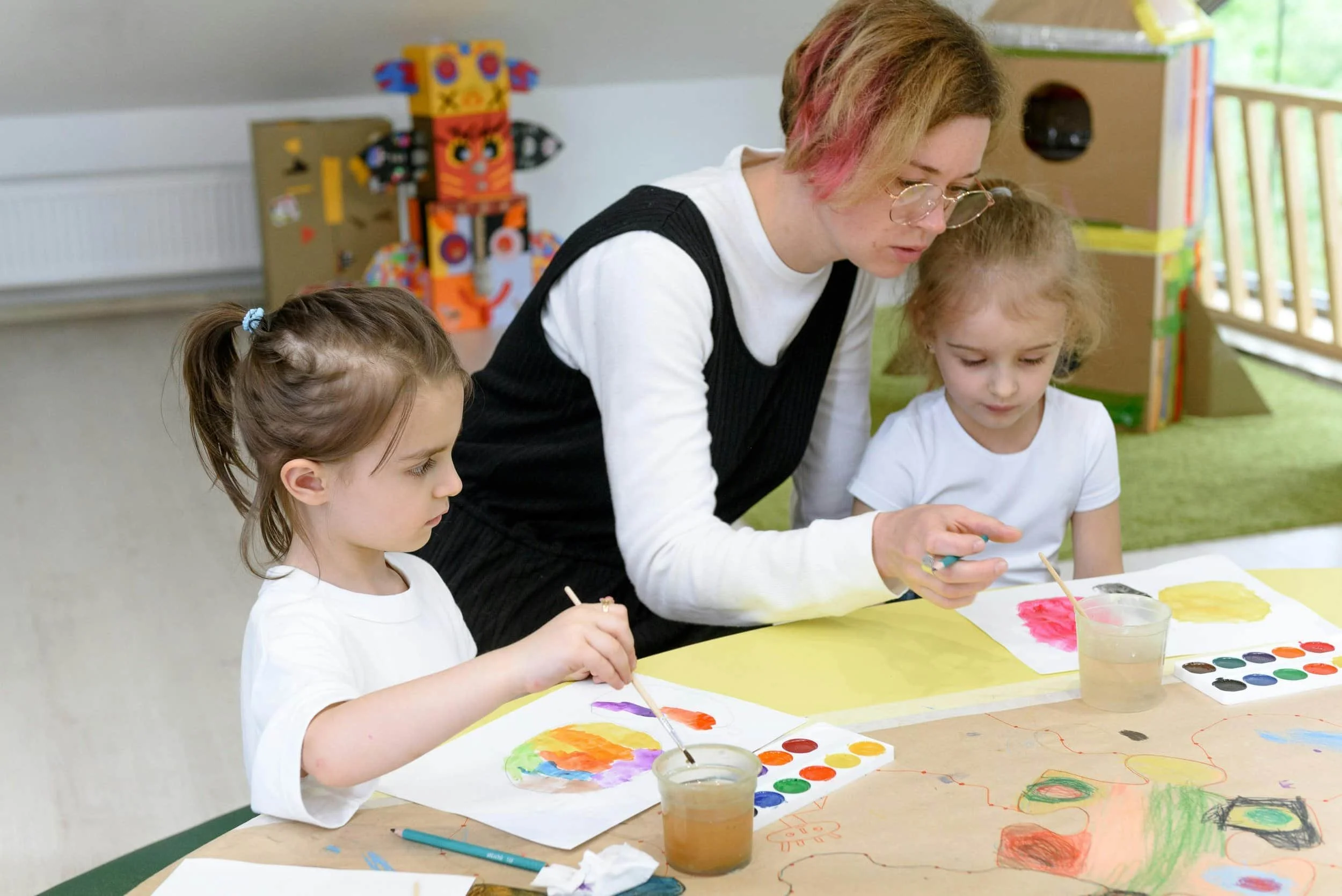
Discover Our Approaches and Find What Feels Right For You

EMDR (Eye Movement Desensitization and Reprocessing) is a structured therapy that encourages the patient to focus briefly on the trauma memory while simultaneously experiencing bilateral stimulation via eye movements, tapping, or buzzers. It focuses on the three ways that trauma affects people: their thoughts, emotions, and body sensations or body memories. EMDR therapy is an extensively researched, effective psychotherapy method proven to help people recover from trauma and PTSD symptoms, anxiety, depression, OCD, chronic pain, addictions, and other distressing life experiences.


Acceptance and Commitment Therapy (ACT) is an action-oriented approach to therapy that focuses on helping clients learn to stop avoiding, denying, and struggling with their inner emotions. Instead, clients learn to accept that these deeper feelings are appropriate responses to certain situations that should not prevent them from moving forward in their lives. It challenges the notion that our negative emotions need to be fixed.


Dialectical behavioral therapy (DBT) is a combination of skills training and talk therapy. DBT was originally developed to treat people with borderline personality disorder, but it has been found effective for people with a variety of mental health conditions. It is an evidence-based approach and is considered a fundamental treatment for those who struggle with emotional regulation. It is structured around 4 main skills:
Mindfulness: This skill teaches awareness of your surroundings and your body in the present moment
Distress tolerance: Learning how to deal with stressful situations and crises without behaving in ways that will make the situation worse. It also teaches acceptance of circumstances that a person cannot change.
Interpersonal effectiveness: This skill focuses on communication, setting boundaries, self-respect, and healthy relationships.
Emotional regulation: Learning how to recognize and understand emotions and change unwanted emotions.



Internal Family Systems (IFS) is a non-pathologizing, evidence-based therapy that believes every human being has a system of protective and wounded inner parts that are led by one’s core Self. Just like members of a family, inner parts are forced from their authentic states into extreme roles within us. A key tenet of IFS is that Self is in everyone, cannot be damaged, and knows how to heal.


Systems Theory focuses on the family as a whole unit along with its individual members. It asserts that people are influenced by their family but each person also influences their entire family. The family is compared to a mobile in which all of the parts are connected, but if one part moves, they all move. In other words, when something affects one member, it can have a resounding impact on everyone. In addition to working with the family system as a unit, this approach also considers how generational, social, community and cultural factors influence individuals and families.
We will ask you questions about your family, friends, work, school, church, community, culture, healthcare, and government because we know that they all have influenced you. As systems therapists, we conduct couples and family therapy, coordinate care with schools, healthcare, and other providers, and/or invite our individual clients’ loved ones into therapy


Solution-Focused Therapy is future-focused, goal-directed, and focuses on solutions, rather than problems. In its purest form, Solution-Focused therapy is a short-term, evidence-based approach. In the most basic sense, it is a hopeful, friendly, positive emotion eliciting, future-oriented vehicle for formulating, motivating, achieving, and sustaining desired behavioral change.


A research-based approach that focuses on principles and behaviors that help couples feel connected and satisfied, or those that are harmful and lead to a break-up. Gottman’s research stems from his “Love Lab,” a fabricated apartment where he and his team have couples come and stay for observation and data collection. Gottman can predict with 90% accuracy which couples will stay together and which ones will not. His predictors fall into two categories:
The Seven Principles of Satisfied and Healthy Relationships
Enhance Your Love Maps
Nurture your fondness and admiration
Turn toward each other instead of away
Let your partner influence you
Solve your solvable problems
Overcome gridlock
Create shared meaning
The 4 Horsemen of the Apocalypse
Criticism
Contempt
Defensiveness
Stonewalling




Emotionally Focused Therapy (EFT) is a form of short-term therapy that aims to improve couple relationships by rekindling the physical and emotional bond.
Drawing on research supporting attachment theory, the therapy regards the security of partner connection as the best lever for change in a dysfunctional relationship and a necessary source of both couple and individual growth. Love, in short, is transformative and the EFT motto is: “Hold me tight.”



The Psychobiological Approach to Couples Therapy® (PACT) relies on the application of research in neuroscience and attachment theory to improve interactions between couples. This approach, which was developed by Stan Tatkin, aims to help couples notice their reactions as they occur and learn how to better address one another’s attachment needs.
Couples learn how to identify their attachment styles as “anchors, waves, or islands.” PACT therapists teach couples skills in 3 areas:
Arousal regulation: The way the human mind and body respond to and manage moods and emotions—both their own and their partner’s—such as stress, anger, or affection
Attachment theory: This theory helps explain how people come to form and nurture attachments with significant people in their lives.
Developmental neuroscience: How the brain changes over time in response to both environmental and biological inputs and the impact these changes have on relationship behavior, from infancy to adulthood.




Trauma-informed yoga is a specialized form of yoga that helps those who are healing from post-traumatic stress disorder (PTSD) or complex trauma.. As emotions rise during the yoga experience, trauma-informed yoga helps people to feel safe enough to stay present and process their feelings. A common trauma response is to dissociate from the body. Trauma-informed yoga helps to regulate one’s nervous system, specifically the fight or flight response.
Trauma-informed yoga is uniquely tailored to the needs of the client, through careful adjustment to the sequence and pace of the session.
Trauma-informed yoga is different from traditional yoga in its specific attention to what the person feels or notices in their body while doing the yoga practice.
Teachers are trained to understand the dissociative effects of trauma and work to help the person integrate having new experiences, the yoga poses, while breathing, feeling, and being alert at the person’s pace. It is an inward practice that focuses on body sensations over physical practice or body alignment, and above else emphasizes always allowing personal choice and self-empowerment.
The Benefits of Trauma-Informed Yoga Include:
Reduced Symptoms of PTSD or complex trauma
Decreased Dissociation and increased mindfulness
Facilitates Body and Emotional Awareness and Connection
Learn to Tolerate Sensations and Uncomfortable Emotions
Builds Emotional Resiliency
Improved Sleep Quality
Decreased Anxiety
Decreased Depression


Somatic processing is the way our nervous system perceives, interprets, and responds to physical sensations from the body. Unlike the cognitive "top-down" approach, which focuses on thoughts and logic, somatic processing operates "bottom-up," prioritizing the raw data sent from sensory receptors in the skin, muscles, and organs to the brain. This includes proprioception (your sense of body position), interoception (awareness of internal states like heartbeat or hunger), and the tactile sensations of touch and temperature. By filtering these signals through the thalamus and the somatosensory cortex, the brain creates a real-time map of our physical state, allowing us to navigate the world and maintain homeostasis.
Beyond simple physical movement, somatic processing plays a critical role in emotional regulation and trauma recovery. Because the body often reacts to stressors before the conscious mind can articulate them—think of the "gut feeling" or the tightness in your chest during an argument—somatic awareness helps individuals identify physiological triggers. In therapeutic contexts, focusing on these bodily sensations allows for the release of stored tension and the recalibration of the autonomic nervous system. By shifting attention toward the physical "felt sense," a person can move from a state of hyperarousal (fight or flight) back to a state of calm, proving that the body is often the most direct route to stabilizing the mind.




When we think of therapy, talk therapy generally comes to mind. Experiential therapy on the other hand, as the name suggests, is a form of therapy that involves immersing yourself in a certain experience. It involves doing more than talking which often elicits information that clients were not aware of.
There are many types of Experiential Therapy:
Play therapy
Drama therapy
Music therapy
Art therapy
Movement therapy
Sand tray therapy
Outdoor/adventure therapy
Animal-assisted therapy




Play therapy has two main types, but many therapists use a hybrid approach:
Non-directive play therapy is when the therapist takes a child to a playroom and allows them to direct the play and activities while the therapist makes therapeutic observations and statements. This type of therapy is most beneficial for traumatized children as it gives them a sense of control. They engage in traumatic, repetitive play rather than normative play. There is typically a lot of intense role-playing, storylines, and reenactment of traumatic events and negative feelings. Over time, their play evolves from traumatic to normative, and from themes of helplessness, fear, and abandonment to themes of empowerment, safety, and connection.
Directive play therapy is when the therapist directs the activities, play, and conversation with some input from the child and/or caregiver. This is more effective for social and behavioral difficulties as it focuses on skill-building and helping kids understand what’s happening in their family, at school, or with their diagnoses (i.e., ADHD, depression, ASD).
Once kids become “tweenies,” their play starts to shift away from imaginative play to other forms of play. Tweens and teens prefer more structured games (cards or board and video games), art or music, and sarcasm and humor. They also become more capable of and open to talk therapy, especially if it has playful or experiential elements. We will go with, especially the older kids, outside for walk-and-talks, tossing a ball, or other activities.