
Compassionate Therapist Helping to Empower & Transform Trauma
-individuals, couples, families-
Helping clients feel seen, supported, and empowered to use their trauma as a doorway to transformation.
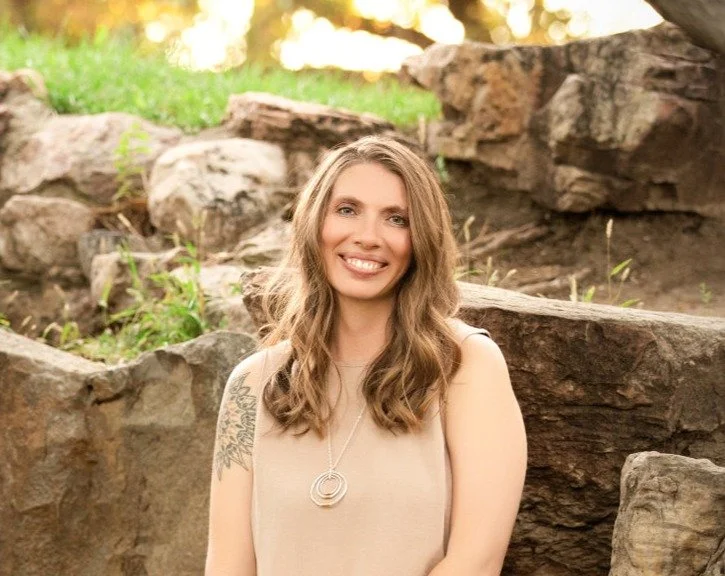
Brandi Hogan
Contact Brandi
385-243-0333

“When nothing’s going right, go left.”
My grandma said this often when I was growing up. It reminds me that no matter how hard things feel, there’s always another path available.
Adults, Couples, Thruples, Families, Teens
Accepts insurance (Aetna, Blue Cross/Blue Shield, DMBA, EMI, PEHP, Regence, Select Health)
Sliding Scale Available
In-person in Sandy, UT
Telehealth in Utah

Good Fit For
Domestic Abuse Victims
Women’s Issues
Trauma/PTSD
Chronic Pain/Illness
Approaches
EMDR
IFS - Internal Family Systems
Somatic Processing and Breathwork
CBT - Cognitive Behavioral Therapy
Gestalt
Person-Centered Therapy
Psychedelic preparation and integration
Culturally sensitive
Specialties and Issues
Intergenerational trauma
Faith transitions and spirituality
Anxiety and depression
Sexual abuse
Nervous system regulation
Breaking harmful patterns
Parenting
Life transitions
Divorce
Grief and loss
Codependency
Chronic stress
Therapy Style
I understand firsthand how trauma and chronic stress can shape our minds, our bodies, and twist our sense of identity. I strive to create a space where you feel validated and supported to move towards your goals at your own pace.
I believe that we all have the innate ability to heal and make great change, even after prolonged and devastating circumstances that make us feel like that's impossible. My work is centered on empowering women to make sense of experiences that may feel overwhelming and sometimes unspeakable. I am trained in Eye Movement Desensitization and Reprocessing (EMDR) and love to use elements of Internal Family Systems (IFS), somatic (body-based) processing, cognitive behavioral therapy (CBT), gestalt, and strength-based approaches. I’m also trained in preparation for and integration of psychedelic assisted experiences of all kinds.
I have a deep passion for generational healing, breaking harmful patterns, supporting nervous system regulation, and guiding personal growth. I truly believe that trauma can be a doorway to transformation. As Rumi said, “The wound is where the light enters.” But I also know how hard it can be to see that when you’re in the thick of it.
I am currently pursuing my master’s degree at Capella University. My clinical supervisor is Lori Lund. When I'm not working, you can find me reading, enjoying a hot cup of chai, spending time near water, enjoying my friends and family, cuddling my cats, and laughing as much as possible.




Brandi’s Specialties and Expertise
Anxiety
Caregivers
Chronic Illness
Chronic Pain
Codependency
Coping Skills
Depression
Divorce
Domestic Abuse
Domestic Violence
Grief
Life Coaching
Life Transitions
Parenting
Peer Relationships
Relationship Issues
School Issues
Self Esteem
Sexual Abuse
Spirituality
Stress
Trauma and PTSD
Women's Issues
Brandi’s Treatment Approach
Types of Therapy
(descriptions from Psychology Today)
-
Attachment-based therapy is form of therapy that applies to interventions or approaches based on attachment theory, which explains how the relationship a parent has with its child influences development.
-
Life coaching is an increasingly popular profession that has no specific licensing or academic requirements. Though psychologists also often consider themselves life coaches, these therapists don't focus on treating mental illness. Instead, they help individuals realize their goals in work and in life. An executive coach, for example, may be enlisted to help a chief executive become a better manager, while a "love" coach may map out a plan to help a client find romantic fulfillment.
-
Culturally sensitive therapists provide therapy that is culturally sensitive. They understand that people from different backgrounds have different values, practices, and beliefs, and are sensitive to those differences when working with individuals and families in therapy.
-
Emotionally Focused Therapy (EFT) is an approach to therapy that helps clients identify their emotions, learn to explore and experience them, to understand them and then to manage them. Emotionally Focused Therapy embraces the idea that emotions can be changed, first by arriving at or 'living' the maladaptive emotion (e.g. loss, fear or shame) in session, and then learning to transform it. Emotionally Focused Therapy for couples seeks to break the negative emotion cycles within relationships, emphasizing the importance of the attachment bond between couples, and how nurturing of the attachment bonds and an empathetic understanding of each others emotions can break the cycles.
-
Energy psychology combines exposure therapy, a Western approach, with holistic techniques to treat mental and physical health conditions. By pairing exposure to anxiety-inducing situations with meridian point stimulation, energy psychology aims to reduce hyperarousal and create healthier responses. Techniques include thought field therapy, tapas acupressure technique, and emotional freedom techniques. While the exact mechanisms of energy psychology are not fully understood, many individuals have reported significant relief from long-standing pain and psychological distress through these interventions.
-
Existential psychotherapy is based on the philosophical belief that human beings are alone in the world, and that this aloneness can only be overcome by creating one's own meaning, and exercising one's freedom to choose. The existential therapist encourages clients to face life's anxieties head on and to start making their own decisions. The therapist will emphasize that, along with having the freedom to carve out meaning, comes the need to take full responsibility for the consequences of one's decisions. Therapy sessions focus on the client's present and future rather than their past.
-
Integrative therapy refers to therapy in which elements from different types of therapy may be used. Therapists 'integrate' two or more therapeutic styles (e.g. Cognitive and Family Systems) to bring about a personalized and practical approach to healing.
Integrative therapy (with a small 'i') may also refer to the process of 'integrating' the personality by taking disowned or unresolved aspects of the self and making them part of a cohesive personality whole. It reduces the use of defense mechanisms that inhibit spontaneity and allows flexibility in solving emotional problems. -
Internal Family Systems (IFS) is an approach to psychotherapy that identifies and addresses multiple sub-personalities or families within each person’s mental system. These sub-personalities consist of wounded parts and painful emotions such as anger and shame, and parts that try to control and protect the person from the pain of the wounded parts. The sub-personalities are often in conflict with each other and with one’s core Self, a concept that describes the confident, compassionate, whole person that is at the core of every individual. IFS focuses on healing the wounded parts and restoring mental balance and harmony by changing the dynamics that create discord among the sub-personalities and the Self.
-
For clients with chronic pain, hypertension, heart disease, cancer, and other health issues such as anxiety and depression, mindfulness-based cognitive therapy, or MBCT, is a two-part therapy that aims to reduce stress, manage pain, and embrace the freedom to respond to situations by choice. MCBT blends two disciplines--cognitive therapy and mindfulness. Mindfulness helps by reflecting on moments and thoughts without passing judgment. MBCT clients pay close attention to their feelings to reach an objective mindset, thus viewing and combating life's unpleasant occurrences.
-
Narrative Therapy uses the client's storytelling to indicate the way they construct meaning in their lives, rather than focusing on how they communicate their problem behaviors. Narrative Therapy embraces the idea that stories actually shape our behaviors and our lives and that we become the stories we tell about ourselves. There are helpful narratives we can choose to embrace as well as unhelpful ones. Although it may sound obvious, the power of storytelling is to elevate the client--who is the authority of their narrative--rather than the therapist, as expert.
-
Reality therapy is a client-centered form of cognitive behavioral psychotherapy that focuses on improving present relationships and circumstances, while avoiding discussion of past events. This approach is based on the idea that our most important need is to be loved, to feel that we belong, and that all other basic needs can be satisfied only by building strong connections with others. Reality therapy teaches that while we cannot control how we feel, we can control how we think and behave. The goal of reality therapy is to help people take control of improving their own lives by learning to make better choices.
-
Relational life therapy offers strategies to combat marital dysfunction and restore harmony in relationships. Couples--those recovering from affairs, traumatic events, or a lull in passion--can find RLT helpful. To repair discord, the therapist identifies the main conflict upsetting the couples' emotional intimacy. Once the partners see how they both contribute to the problem, the therapist teaches them skills to improve the ways they relate to each other. Couples may see a change in their relationship within three to six months.
-
Somatic (from the Greek word 'somat', meaning body) psychotherapy bridges the mind-body dichotomy recognizing that emotion, behavior, sensation, impulse, energy, action, gesture, meaning and language all originate in physical experiences. Thinking is not an abstract function but motivates, or is motivated by, physical expression and action. A somatic approach to trauma treatment can be effective by examining how past traumatic experiences cause physical symptoms (e.g. bodily anesthesia or motor inhibitions) which in turn affect emotion regulation, cognition and daily functioning.
Dance therapy reflects a somatic approach. -
Strength-based therapy is a type of positive psychotherapy and counseling that focuses more on your internal strengths and resourcefulness, and less on weaknesses, failures, and shortcomings. This focus sets up a positive mindset that helps you build on you best qualities, find your strengths, improve resilience and change worldview to one that is more positive. A positive attitude, in turn, can help your expectations of yourself and others become more reasonable.
-
Trauma focused cognitive behavioral therapy (TF-CBT) helps people who may be experiencing post-traumatic stress after a traumatic event to return to a healthy state.
Contact Brandi
385-243-0333
email: brandi@ele-mentalhealing.com