
Compassionate Healing for Trauma and Relationships
-individuals, couples, and families-
Creating a safe and affirming space for those who are overwhelmed with trauma, identity, and relationship struggles.
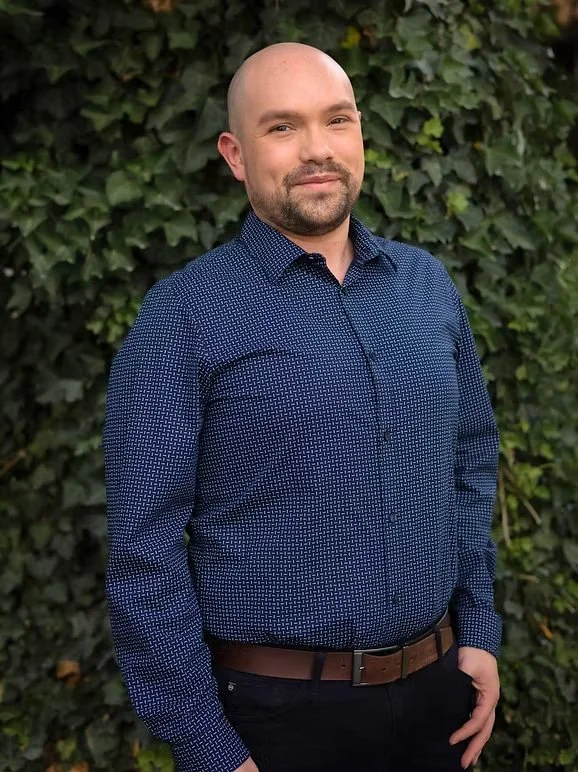

Carlos Moreno, AMFT
Contact Carlos
385-237-4833

“Slow down, you’re doing fine” – Billy Joel, “Vienna”
Adults, Couples, Thruples, Families
Accepts insurance (Aetna, Blue Cross/Blue Shield, DMBA, EMI, PEHP, Regence, Select Health)
Sliding Scale Available
In-person in Sandy, UT
Telehealth in Utah

Good Fit For
Trauma/PTSD
Couples, Thruples, Relationships
LGBTQ+
Men’s Issues
Neurodiversity
Approaches
EMDR
IFS - Internal Family Systems
Somatic Processing
Imago
Brainspotting
Gottman Method
DBT - Dialectical Behavioral Therapy
CBT - Cognitive Behavioral Therapy
Systems Therapy
Solution Focused
Motivational Interviewing
Life Coaching
Other Specialties and Issues
Immigrants
Anxiety and depression
Sexual abuse
Mood disorders
Family conflict
Life transitions
Grief and loss
Suicidal ideation
Chronic stress
Therapy Style
My approach is compassionate, collaborative, and genuine. I believe therapy works best when clients feel comfortable enough to be fully themselves, so I bring honesty, curiosity, and humor into the therapy room whenever it feels helpful.
My name is Carlos, and I am an Associate Marriage and Family Therapist. As a first-generation immigrant from Chile, a member of the LGBTQ+ community, and someone who is neurodivergent, I understand how important it is to feel truly seen, accepted, and safe. I strive to create a warm, affirming, and inclusive space where clients can show up exactly as they are without fear of judgment.
I am passionate about helping individuals and couples heal from trauma, especially attachment and inner-child wounds, so they can better understand themselves, their relationships, and the patterns that may be keeping them stuck. I enjoy supporting couples in rebuilding trust, improving communication, and reconnecting emotionally, while also helping individuals move toward deeper self-understanding, healing, and self-compassion.
I deeply value getting to know each client’s unique story and experience, and my background in Sociology and Social Work helps me approach my work with cultural sensitivity and care.
I am trained in EMDR and Brainspotting, and informed in Internal Family Systems (IFS), Cognitive Behavioral Therapy (CBT), Dialectical Behavior Therapy (DBT), Somatic Therapy, Motivational Interviewing, and Imago Relational Therapy. I believe healing happens at each person’s own pace, and I strive to support and gently challenge clients in ways that foster meaningful, lasting change.
Personally, I love traveling, hiking, and staying active through activities like pickleball, volleyball, swimming, yoga, and other mindful movement practices. I feel most grounded and connected to myself through movement, nature, meaningful relationships, and experiencing different cultures alongside family, friends, and my bernedoodle, Milo.




Carlos’ Specialties and Expertise
Top Specialties
LGBTQ+
Neurodiversity
Trauma and PTSD
Expertise
ADHD
Anxiety
Bipolar Disorder
Borderline Personality (BPD)
Coping Skills
Depression
Emotional Disturbance
Family Conflict
Grief
LGBTQ+
Life Transitions
Men's Issues
Mood Disorders
Parenting
Personality Disorders
Racial Identity
Relationship Issues
Self Esteem
Sexual Abuse
Spirituality
Stress
Substance Use
Suicidal Ideation
Trauma and PTSD
Women's Issues
Carlos’ Treatment Approach
Types of Therapy
(descriptions from Psychology Today)
-
Cognitive-behavioral therapy stresses the role of thinking in how we feel and what we do. It is based on the belief that thoughts, rather than people or events, cause our negative feelings. The therapist assists the client in identifying, testing the reality of, and correcting dysfunctional beliefs underlying his or her thinking. The therapist then helps the client modify those thoughts and the behaviors that flow from them. CBT is a structured collaboration between therapist and client and often calls for homework assignments. CBT has been clinically proven to help clients in a relatively short amount of time with a wide range of disorders, including depression and anxiety.
-
Culturally sensitive therapists provide therapy that is culturally sensitive. They understand that people from different backgrounds have different values, practices, and beliefs, and are sensitive to those differences when working with individuals and families in therapy.
-
Dialectical Behavior Therapy (DBT) is the treatment most closely associated with Borderline Personality Disorder (BPD). Therapists practice DBT in both individual and group sessions. The therapy combines elements of CBT to help with regulating emotion through distress tolerance and mindfulness. The goal of Dialectical Behavior Therapy is to alleviate the intense emotional pain associated with BPD.
-
EMDR (Eye Movement Desensitization and Reprocessing) is an information processing therapy that helps clients cope with trauma, addictions, and phobias. During this treatment, the patient focuses on a specific thought, image, emotion, or sensation while simultaneously watching the therapist's finger or baton move in front of his or her eyes. The client is told to recognize what comes up for him/her when thinking of an image; then the client is told to let it go while doing bilateral stimulation. It's like being on a train; an emotion or a thought may come up and the client lets it pass as though they were looking out the window of the moving train.
-
Family Systems therapists view problems within the family as the result not of particular members' behaviors, but of the family's group dynamic. The family is seen as a complex system having its own language, roles, rules, beliefs, needs and patterns. The therapist helps each individual member understand how their childhood family operated, their role in that system, and how that experience has shaped their role in the current family. Therapists with the MFT credential are usually trained in Family Systems therapy.
-
The Gottman Theory For Making Relationships Work shows that to make a relationship last, couples must become better friends, learn to manage conflict, and create ways to support each other's hopes for the future. Drs. John and Julie Gottman have shown how couples can accomplish this by paying attention to what they call the Sound Relationship House, or the seven components of healthy relationships.
-
Imago Relationship Therapy is a form of marriage therapy that takes a relationship approach rather than an individual approach to problem solving in a marriage. Imago therapy is a wonderfully effective and safe approach to helping relationship partners grow into understanding each other more fully and relating more honestly as they evolve into greater wholeness as individuals within the relational context they share. Imago is also relevant for single individuals as we are all in many relational contexts.
-
Internal Family Systems (IFS) is an approach to psychotherapy that identifies and addresses multiple sub-personalities or families within each person’s mental system. These sub-personalities consist of wounded parts and painful emotions such as anger and shame, and parts that try to control and protect the person from the pain of the wounded parts. The sub-personalities are often in conflict with each other and with one’s core Self, a concept that describes the confident, compassionate, whole person that is at the core of every individual. IFS focuses on healing the wounded parts and restoring mental balance and harmony by changing the dynamics that create discord among the sub-personalities and the Self.
-
Motivational Interviewing (MI) is a method of therapy that works to engage the motivation of clients to change their behavior. Clients are encouraged to explore and confront their ambivalence. Therapists attempt to influence their clients to consider making changes, rather than non-directively explore themselves. Motivational Interviewing is frequently used in cases of problem drinking or mild addictions.
-
Unlike traditional psychology that focuses more on the causes and symptoms of mental illnesses and emotional disturbances, positive psychology emphasizes traits, thinking patterns, behaviors, and experiences that are forward-thinking and can help improve the quality of a person's day-to-day life. These may include optimism, spirituality, hopefulness, happiness, creativity, perseverance, justice, and the practice of free will. It is an exploration of one's strengths, rather than one's weaknesses. The goal of positive psychology is not to replace those traditional forms of therapy that center on negative experiences, but instead to expand and give more balance to the therapeutic process.
-
Psychodynamic therapy, also known as insight-oriented therapy, evolved from Freudian psychoanalysis. Like adherents of psychoanalysis, psychodynamic therapists believe that bringing the unconscious into conscious awareness promotes insight and resolves conflict. But psychodynamic therapy is briefer and less intensive than psychoanalysis and also focuses on the relationship between the therapist and the client, as a way to learn about how the client relates to everyone in their life.
-
Solution-focused therapy, sometimes called "brief therapy," focuses on what clients would like to achieve through therapy rather than on their troubles or mental health issues. The therapist will help the client envision a desirable future, and then map out the small and large changes necessary for the client to undergo to realize their vision. The therapist will seize on any successes the client experiences, to encourage them to build on their strengths rather than dwell on their problems or limitations.
-
Trauma focused cognitive behavioral therapy (TF-CBT) helps people who may be experiencing post-traumatic stress after a traumatic event to return to a healthy state.

Carlos’ Coaching Specialties
-
Learning effective communication tools
Breaking patterns of miscommunication or conflict
Developing active listening skills
Expressing needs and boundaries clearly
Reducing reactivity during disagreements
Building emotional awareness in the relationship
Navigating difficult conversations
Strengthening connection and understanding
Co-regulation skills for couples
Managing stress together
Rebuilding communication after disconnection
Navigating cultural or identity differences in communication
-
Learning to express needs and boundaries
Developing assertiveness without aggression
Active listening and empathy skills
Navigating difficult conversations
Reducing people-pleasing patterns
Building confidence in self-expression
Understanding communication styles
Improving workplace or family communication
Setting and maintaining boundaries
Advocating for yourself effectively
-
Identifying and naming emotions
Practical grounding and self-soothing techniques
Managing overwhelm and stress
Building distress tolerance
Understanding your nervous system responses
Reducing emotional reactivity
Developing healthy coping strategies
Building emotional resilience
Creating sustainable self-care practices
Moving through big feelings without shutting down
Reconnecting mind and body awareness
-
Communication in queer relationships
Navigating identity within partnerships
Building affirming self-expression
Boundary-setting with family or community
Strengthening LGBTQ+ relationship skills
Managing cultural or religious dynamics
Building chosen family connections
Developing resilience and coping skills
-
Honoring lived experience and cultural context
Communication across cultural differences
Navigating bicultural identity
Immigrant experience and life skills
Building skills while honoring your background
FAQ’s
Coaching for Couples
-
I focus on communication skills—learning to listen, express needs, navigate conflict, and reduce reactivity. This is skill-building work, not couples therapy. We stay focused on tools and strategies you can use right away, not processing past wounds or trauma.
-
I have clear boundaries from my case management and social work background. We focus on teaching skills—how to communicate effectively, how to regulate during conflict, how to listen actively. If deeper processing is needed, I'll let you know that therapy is the better fit.
-
Coaching is forward-focused and skill-based. We don't diagnose, treat mental health conditions, or process trauma. We build practical communication and regulation tools you can implement immediately.
-
Absolutely. I'm LGBTQ+ affirming and bring cultural sensitivity to all relationship dynamics.
-
Perfect! Coaching is ideal for couples who want to strengthen communication proactively, build skills, or navigate transitions together.
-
Yes. Individual coaching can help you develop your own communication and regulation skills, which naturally impacts your relationship. However, relationship work is most effective when both partners are involved.
-
Ideally yes for couples coaching, but we can discuss what works best for your situation.
Emotional Regulation & Coping Skills
-
Emotional regulation is the ability to notice, understand, and manage your emotional responses. It's about building skills to stay grounded, reduce reactivity, and move through big feelings in healthy ways.
-
I teach practical tools: grounding techniques, nervous system awareness, distress tolerance skills, and coping strategies. These are the same life skills I taught in case management, adapted for a coaching format.
-
We'll work on building awareness of your responses and developing tools to help you stay present and regulated. This is skill-building, not processing—we focus on what helps you move forward.
-
Absolutely. Learning to regulate your emotions reduces reactivity, improves communication, and strengthens connection.
-
Yes. We'll work on building emotional awareness and learning that emotions are information. You'll develop skills to notice and respond to emotions in healthy ways.
-
Coaching stays focused on skill-building and moving forward. If deeper emotional processing is needed, that's therapy territory. I'll let you know if therapeutic support would be more appropriate.
LGBTQ+ Affirming Coaching
-
Yes, fully. I'm committed to creating inclusive, safe spaces and bring cultural sensitivity to all identities and experiences.
-
Absolutely. I work with LGBTQ+ couples and understand the unique dynamics and contexts of queer relationships.
-
I understand those intersections and bring warmth and cultural sensitivity. We can build communication strategies, boundary skills, and coping tools to help you navigate those spaces.
Individual Coaching
-
Life coaching is skill-building and goal-focused. We work on communication skills, regulation strategies, coping tools, and moving forward—not processing trauma or treating mental health conditions. I teach practical skills you can use in daily life.
-
Common topics include learning to communicate needs and boundaries, building emotional regulation skills, managing stress and overwhelm, developing coping strategies, improving relationships, and navigating life transitions.
-
Yes! Communication skills are a core part of what I teach—how to express yourself clearly, set boundaries, listen actively, and navigate difficult conversations.
-
Absolutely. Coaching is practical and action-oriented. You'll leave sessions with specific strategies and skills you can implement immediately.
-
Yes! Many people do both. Therapy processes deeper wounds while coaching builds practical skills. Just let both providers know so we can support you without overlap.
-
That's okay. We'll start with a free consultation to explore what you're looking for and whether coaching is the right fit.
-
Coaching can teach coping and regulation skills that support emotional wellness, but it's not treatment for mental health conditions. If you're experiencing clinical anxiety or depression, therapy is the appropriate path.
-
No problem. I create a warm, approachable space and meet you where you are. Coaching is collaborative, and you're in the driver's seat.
Pricing & Logistics
-
$125 per single session. If book a block of 6 or more sessions then $100 per session. Sliding-scale options available based on financial need. I also offer a free 15–20-minute introductory consultation.
-
A sliding scale means you pay what you can afford within the range. I want coaching to be accessible, so we'll work together to find a rate that fits your situation.
-
Book a free intro consultation, and we'll explore whether coaching is a good fit and discuss your goals.
-
Not simultaneously for the same issues; we keep clear boundaries between the two. But we can discuss what makes sense for your situation.
-
Sessions are typically 50–60 minutes.
-
That depends on your goals. Many clients meet weekly or biweekly, but we'll create a schedule that works for you.